AI Summer School
Where high schoolers teach machines to see medicine.
A free, immersive one-week journey into artificial intelligence and computer vision for medical images, hosted by the Pitt HexAI Research Laboratory and the Computational Pathology and AI Center of Excellence.

Artificial intelligence, taught the way it should be learned.
.jpg)
Our AI Summer School, organized by the Pitt HexAI Research Laboratory and the Computational Pathology and AI Center of Excellence, gives advanced high school students (grades 11 and 12) a stimulating, hands-on entry into artificial intelligence and its application in medical imaging informatics. We launched the program in the summer of 2023, and it has run every year since.
This year's school runs Monday, June 8 to Friday, June 12, 2026, 9:00 am to 4:00 pm EDT at the University of Pittsburgh, in collaboration with CPACE, the School of Health and Rehabilitation Sciences, and the IEEE Computer Society.
Medical imaging informatics uses AI-driven computer vision to analyze and interpret medical images for better diagnosis and treatment. A central theme is object detection and localization, teaching AI systems to find and locate relevant features within an image. Through lectures, hands-on exercises, and collaborative projects in Python, students gain practical skills to tackle real-world challenges in the field.
Code in Python
Hands-on practice with Python and Google Colab, no setup headaches, just building.
Real AI models
From CNNs to YOLO and SSD object detection, applied directly to medical images.
Learn from experts
Daily faculty lectures plus guest talks from AI researchers in academia and industry.
Earn a certificate
Complete a team project and receive a certificate of participation at the closing ceremony.
The Program
A comprehensive one-week program that takes students from foundational concepts to a real, collaborative AI project, with lectures, hands-on coding, and guest talks every day.
Intro to AI and computer vision
The program opens with foundational concepts: an introduction to AI, computer vision, and digital image operations, followed by hands-on practice with Python and Google Colab.
Deep learning and CNNs
As the week progresses, students explore advanced topics such as deep learning and convolutional neural networks (CNNs), the engines behind modern image understanding.
Object detection: YOLO and SSD
Students learn object detection techniques like YOLO and SSD, practicing medical image annotation, image filtering, and object localization with tools like PyTorch, ITK-SNAP, and Liner.ai.
Team project and certificate ceremony
The program culminates in a collaborative team project applying everything to real-world challenges, followed by team presentations and a certificate ceremony recognizing each student's achievement.
Inside the classroom
Registration
We invite high school students in grades 11 and 12 with a strong interest in advanced technology, healthcare informatics, and artificial intelligence to apply. Students from all backgrounds and levels of experience are encouraged to join.
Upon successful completion of the program, students receive a certificate of participation, acknowledging their commitment and accomplishments in AI-powered medical imaging informatics.
Applications open each spring. Check back ahead of the next cohort, or follow Pitt HexAI for announcements.
Registration cycles
- Year 2026, closed Apr 30, 2026Closed
- Year 2025Closed
- Year 2024Closed
- Year 2023Closed
Students' Testimonials
Read what past participants have to say about their experience at the AI Summer School.
Our Team
Hover over anyone to reveal more about them. The faculty, staff, and speakers who make the AI Summer School possible.
Alumni
Students from four cohorts who have come through the AI Summer School (first names only).
By the Numbers
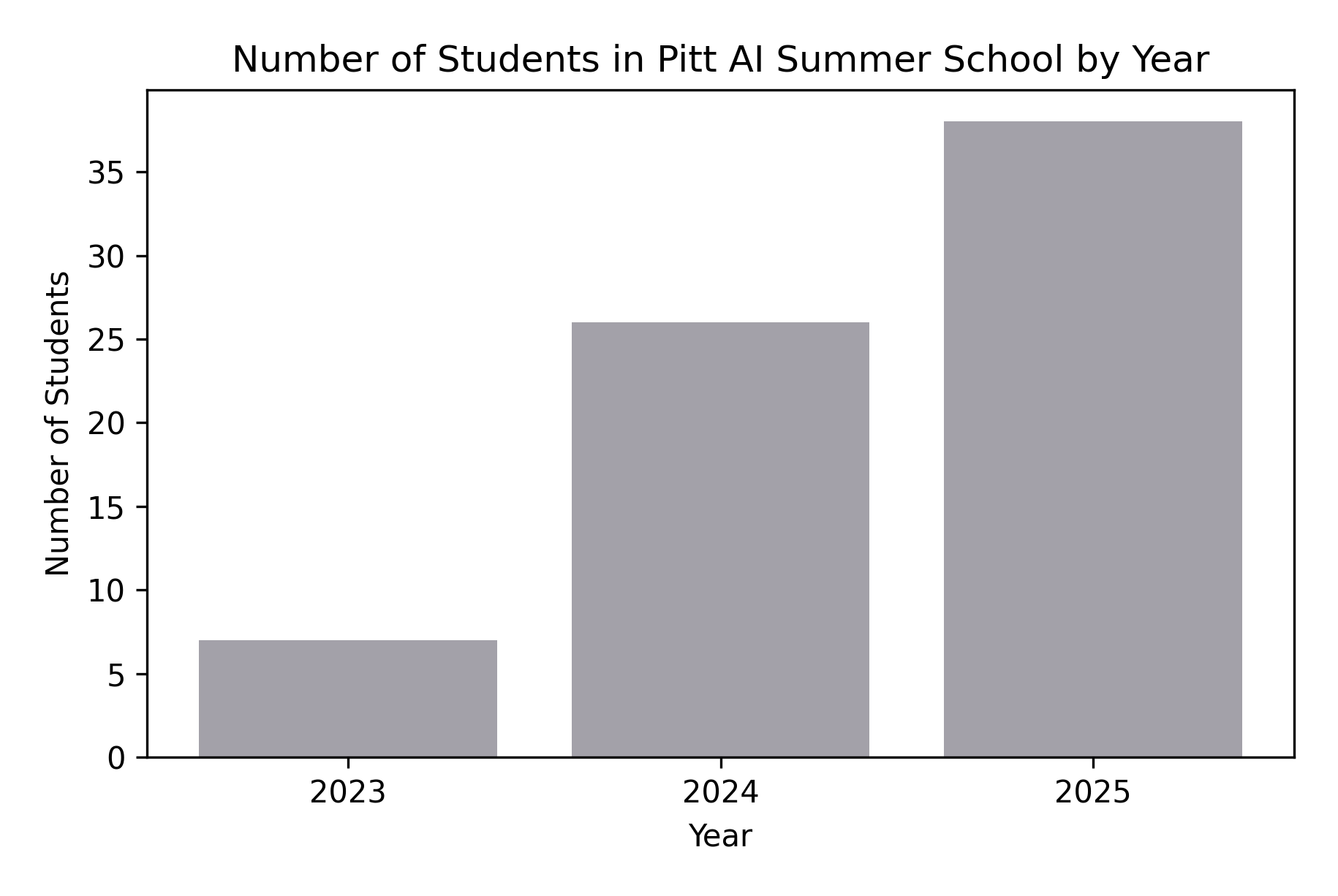
Number of students by year
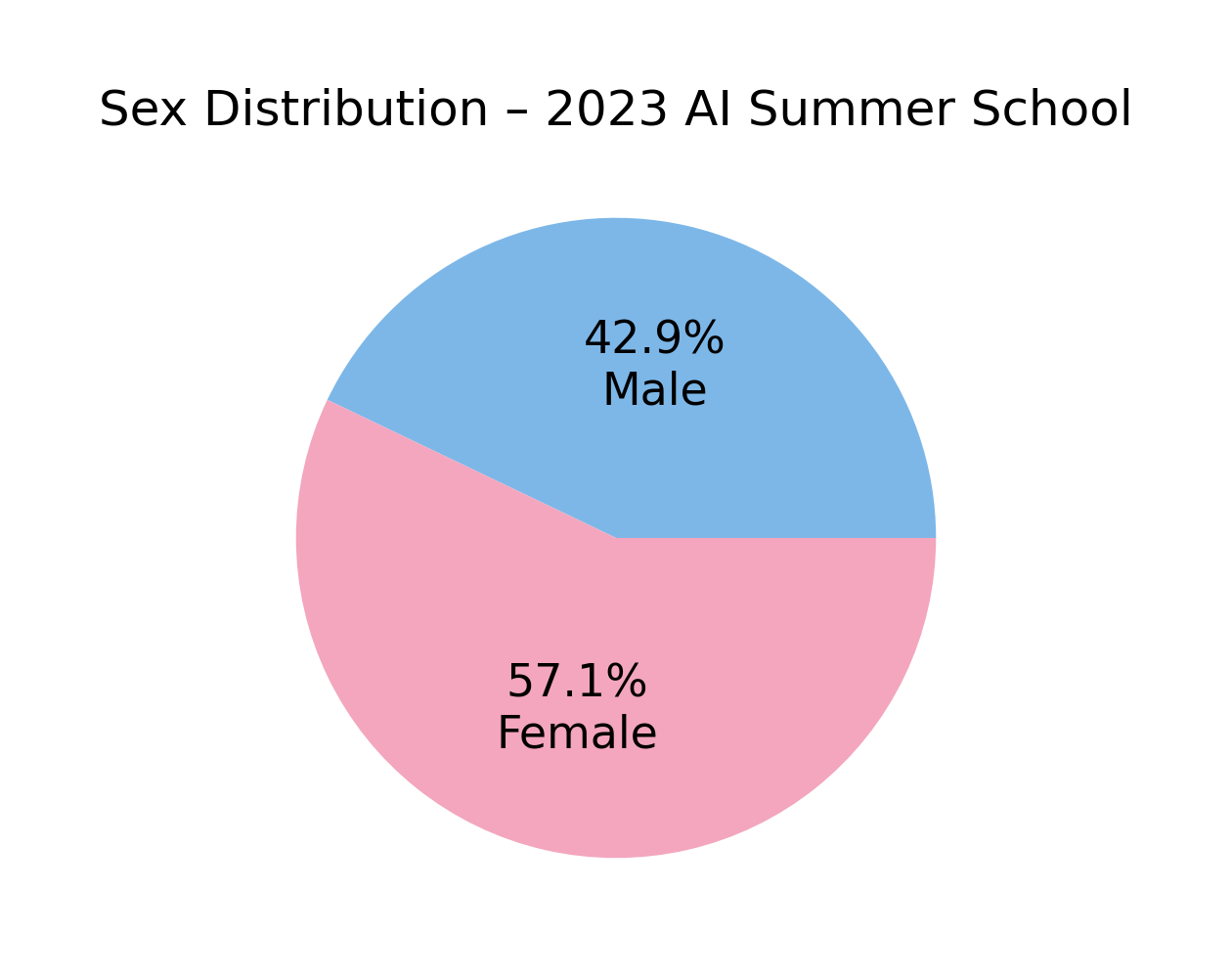
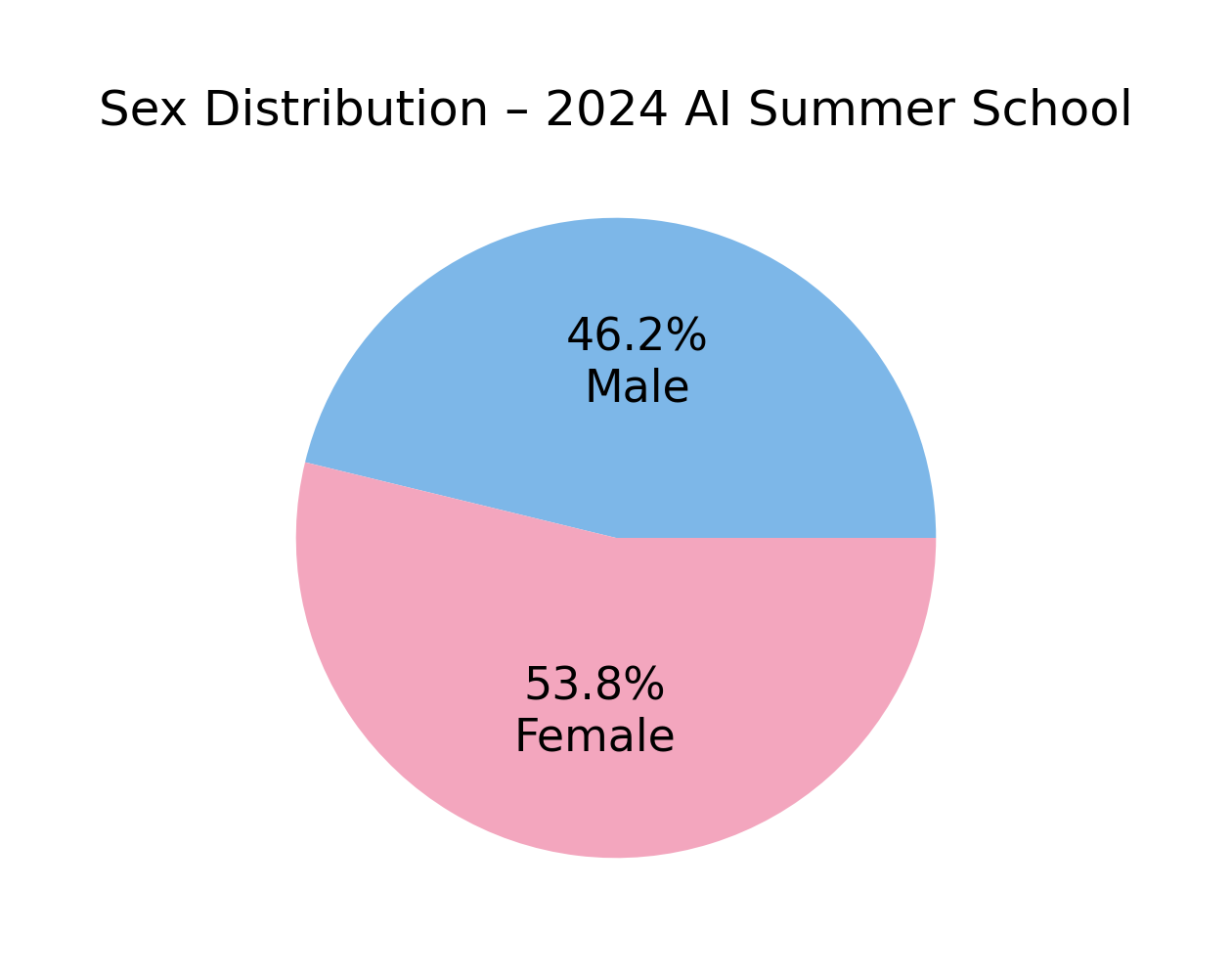
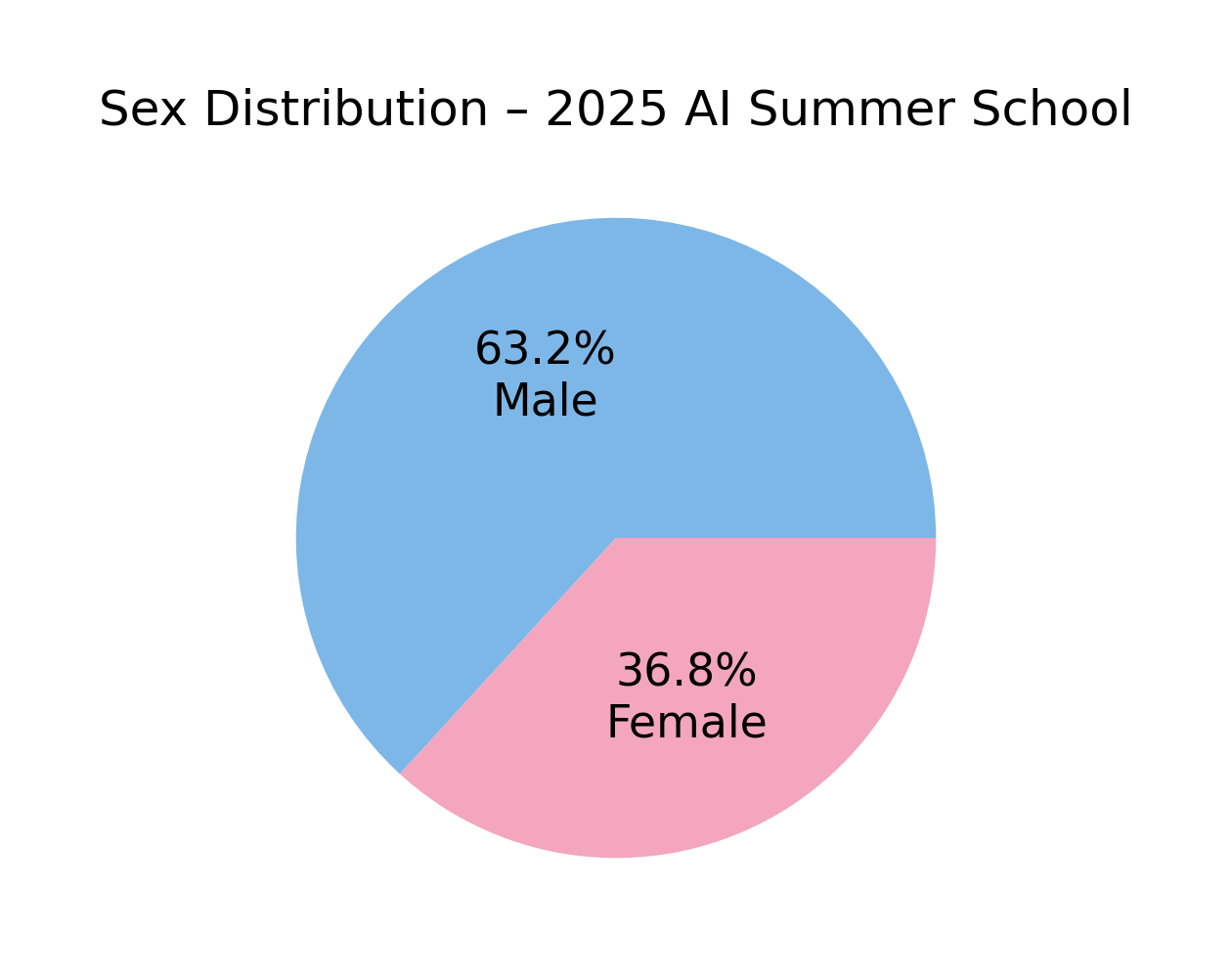
Sex distribution by year
Organizers and Sponsors
Organizers

Frequently Asked Questions
Everything you might want to know before applying. Tap a question to expand it.
High school students in grades 11 and 12. Students from all backgrounds and levels of experience are encouraged to apply, no prior AI background required.
Nothing. The AI Summer School is completely free, and lunch is provided at no cost each day.
The only prerequisite is basic Python programming, and a beginner-friendly tutorial is shared beforehand. Everything else is taught from the ground up.
The 2026 school runs Monday, June 8 to Friday, June 12, 9:00 am to 4:00 pm EDT, in person at the University of Pittsburgh in Pittsburgh, Pennsylvania. Admitted students receive additional location details.
Foundations of AI and computer vision, deep learning and convolutional neural networks, and object detection with YOLO and SSD, all hands-on in Python and Google Colab. You will practice medical image annotation and finish with a collaborative team project, plus daily guest talks.
A laptop and charger (and a mouse if you prefer one). Lunch is provided free each day.
Yes. Students who successfully complete the program receive a certificate of participation in AI-powered medical imaging informatics.
Applications open each spring, right here on this website. The 2026 cohort is now closed, so check back ahead of the next cycle.
The Pitt HexAI Research Laboratory and the Computational Pathology and AI Center of Excellence (CPACE) at the University of Pittsburgh, in collaboration with the School of Health and Rehabilitation Sciences and the IEEE Computer Society.