Director, Pitt HexAI Research Laboratory
Director, Division of Scientific Affairs, CPACE
Chair, Pitt AI Summer School
Vice Chair, IEEE Computer Society (Pittsburgh)
Fellow, AMIA
Federal Grant Review Panelist (NIH & NSF)


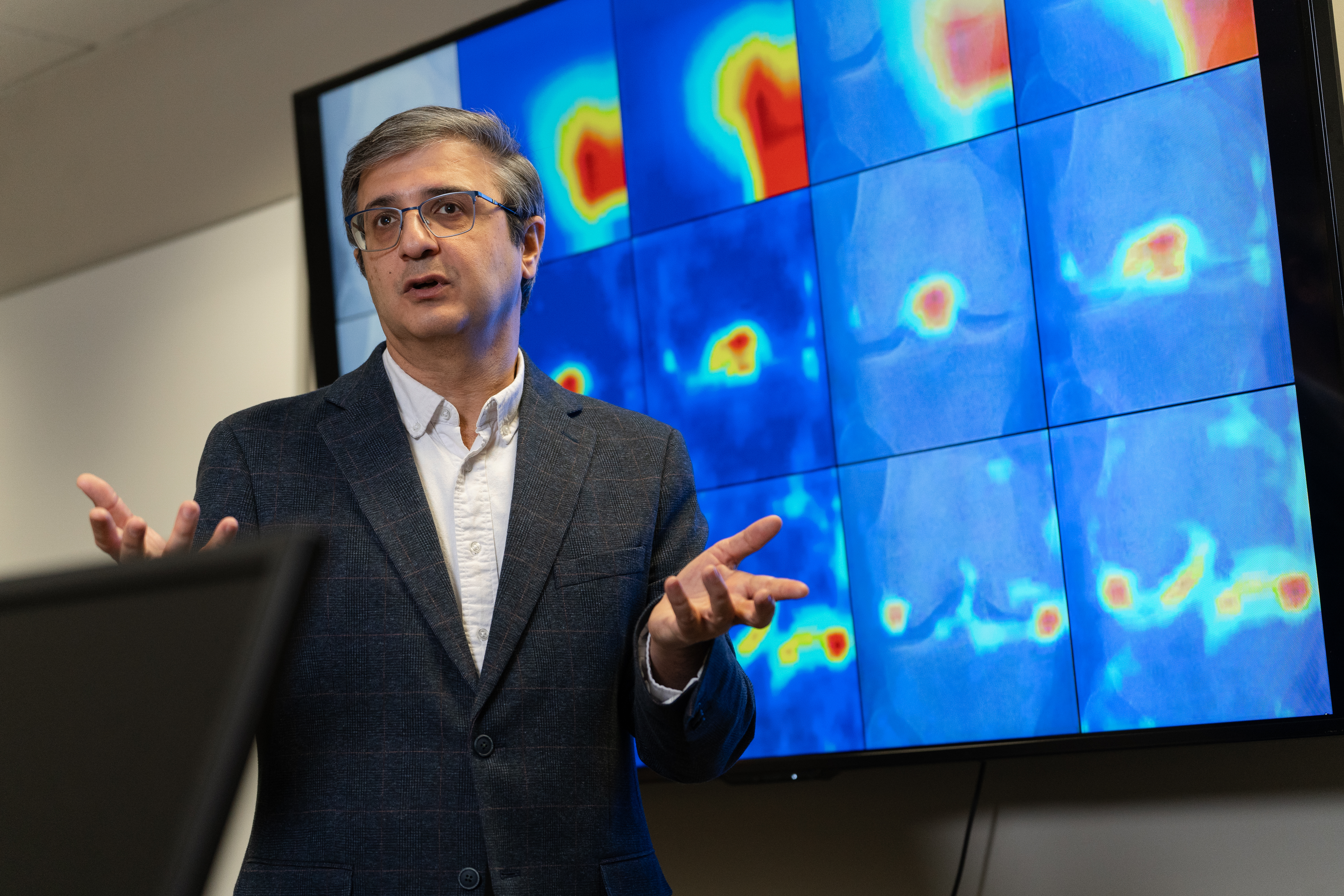
The Pitt Health + Explainable AI (Pitt HexAI) Research Laboratory at the University of Pittsburgh, led by Ahmad P. Tafti, has a simple goal: to make healthcare better through the power of trustworthy and explainable artificial intelligence (AI). From a computational perspective, our research focuses on engineering, implementing, validating, and deploying cutting-edge fundamental and applied explainable AI algorithms, and promoting their applications in healthcare problems. We attempt to answer three main questions: 1) how advanced explainable AI strategies are developing in healthcare, 2) how they shape healthcare systems, and 3) how they impact the healthcare community. From a clinical perspective, our research agenda spans musculoskeletal (MSK) care, with a focus on our aging populations and sports-related injuries and conditions (e.g., ligament injuries, joint degeneration, and total joint arthroplasty) and computational orthopedics.
The Pitt HexAI Research Laboratory is functioning in the Department of Health Information Management at the School of Health and Rehabilitation Sciences. Our group at Pitt HexAI is a multidisciplinary team, and it benefits from several extramural collaborations with other academic institutions, nationwide and worldwide. Moreover, our group aims to provide the highest quality education and research experience in AI-powered health informatics at all levels, from K-12 to undergraduate, graduate, MD, and postdoctoral training.
Research Interests
Technical
Trustworthy and Explainable AI
Responsible and Accountable AI
Medical Imaging Informatics
Clinical
Musculoskeletal (MSK) Care
Computational Orthopedics
Sports-Related MSK Injuries
Supports | Partners | Collaborators



Recent News
News: 2026
- September 2026: Pitt HexAI Podcast Episode #44 featuring James Grana, PhD, and Andrew Fogner, MS, from BlueCross BlueShield of South Carolina is now available on YouTube. HexAI Podcast .
- August 2026: Our article, Technology enhancing care for veterans with spinal cord injury (TECVets): an exploratory qualitative study , led by Kenneth O. Anujio and colleagues, has been published in Disability and Rehabilitation: Assistive Technology.
- August 2026: The Responsible, Explainable, and Ethical-by-Design Artificial Intelligence in Clinical Applications (REED-AI) Emerging Area Track at ACM TRUST 2027 is co-chaired by Dr. Ahmad P. Tafti and an interdisciplinary team of experts from Pitt, the University of Nottingham, Virginia Wesleyan University, and Malmö University.
- August 2026: Our submission, "Label-Efficient Data Engineering for Reliable Orthopedic Radiograph Registry Construction Under Distribution Shift", led by Yushui Han and colleagues, has been accepted at the DEMI Workshop at MICCAI 2026 in Strasbourg, France.
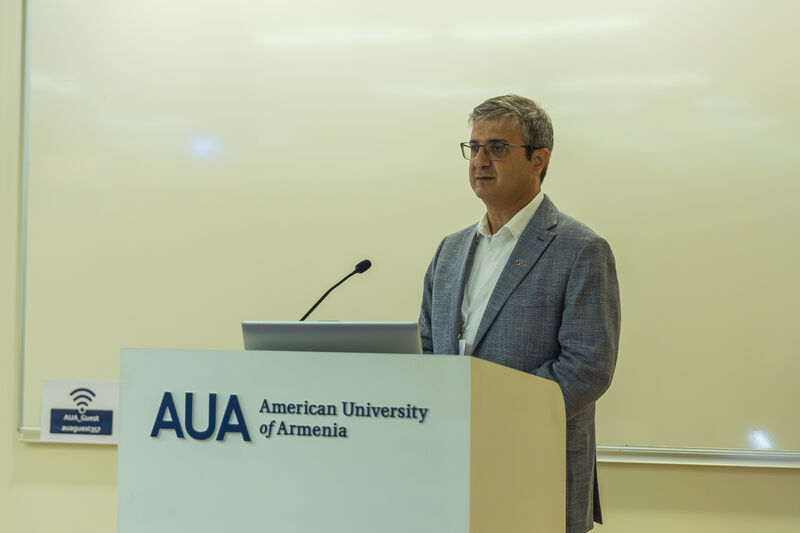
- August 2026: Dr. Ahmad P. Tafti has been invited to serve as a Keynote Speaker at CODASSCA 2026 , organized by the American University of Armenia and co-sponsored by IEEE, with his keynote, "AI and Clinicians-in-the-Loop: Rethinking AI Explainability in Medical Imaging."
- August 2026: Pitt HexAI Podcast Episode #43 featuring Dr. Daniel Heller from Memorial Sloan Kettering Cancer Center is now available on all major podcast platforms. HexAI Podcast .
- July 2026: Dr. Ahmad P. Tafti is serving as a Track Chair for the Explainable and Trustworthy AI for Digital Health (ETA-Digital Health) track at ACM TRUST 2027.
-
July 2026:
Our submissions to the
RSNA 2026 Annual Meeting
in Chicago, Illinois, have been accepted.
𝗔𝗯𝘀𝘁𝗿𝗮𝗰𝘁: "Time-Aware Risk Prediction of Knee Osteoarthritis Progression from Plain Radiographs with Uncertainty-Aware and Explainable Modeling" led by Farnaz Rezvani and colleagues.
𝗔𝗯𝘀𝘁𝗿𝗮𝗰𝘁: "Federated Deep Learning for Automated Detection and Classification of Knee Osteoarthritis Using Plain Radiographs" led by Ashley DeNoyer, Ekaterina Bruno and colleagues.
- July 2026: Dr. Ahmad P. Tafti gave a talk at the Department of Surgery, University of Pittsburgh School of Medicine, entitled "Trust, Transparency, and Uncertainty Quantification: The Next Frontier in AI-Powered Medical Imaging."
- July 2026: Our paper, Trustworthy AI models to predict prolonged hospital length-of-stay in orthopedic surgery , led by Farnaz Rezvani and colleagues, has been published in npj Health Systems.
- July 2026: Dr. Ahmad P. Tafti has been appointed Associate Editor of Neural Processing Letters (Springer), supporting high-quality research in artificial intelligence, machine learning, and computational intelligence.
- July 2026: Our abstract, "Are state-of-the-art machine learning and/or large language models (LLMs) able to predict infection risks after total knee arthroplasty using only pre-operative variables?", led by Farnaz Rezvani and colleagues, has been accepted for presentation at the Joint EBJIS–MSIS 2026 Conference in Porto, Portugal – September 17–19, 2026.
- July 2026: Pitt HexAI Podcast Episode #42 featuring Sean McGunigal from Epic is now available on all major podcast platforms. HexAI Podcast .
- June 2026: Our article, Artificial Intelligence in Orthopedics: Essential Knowledge, Applications, and Responsible Integration for Residents and Surgeons led by Anil Regmi and colleagues, , has been published, providing a practical overview of responsible AI integration in orthopedic education and clinical practice.
- June 2026: Pitt HexAI joined the Pittsburgh Cure Sarcoma Run/Walk , supporting community efforts to advance sarcoma awareness while reinforcing its commitment to trustworthy AI for musculoskeletal healthcare.
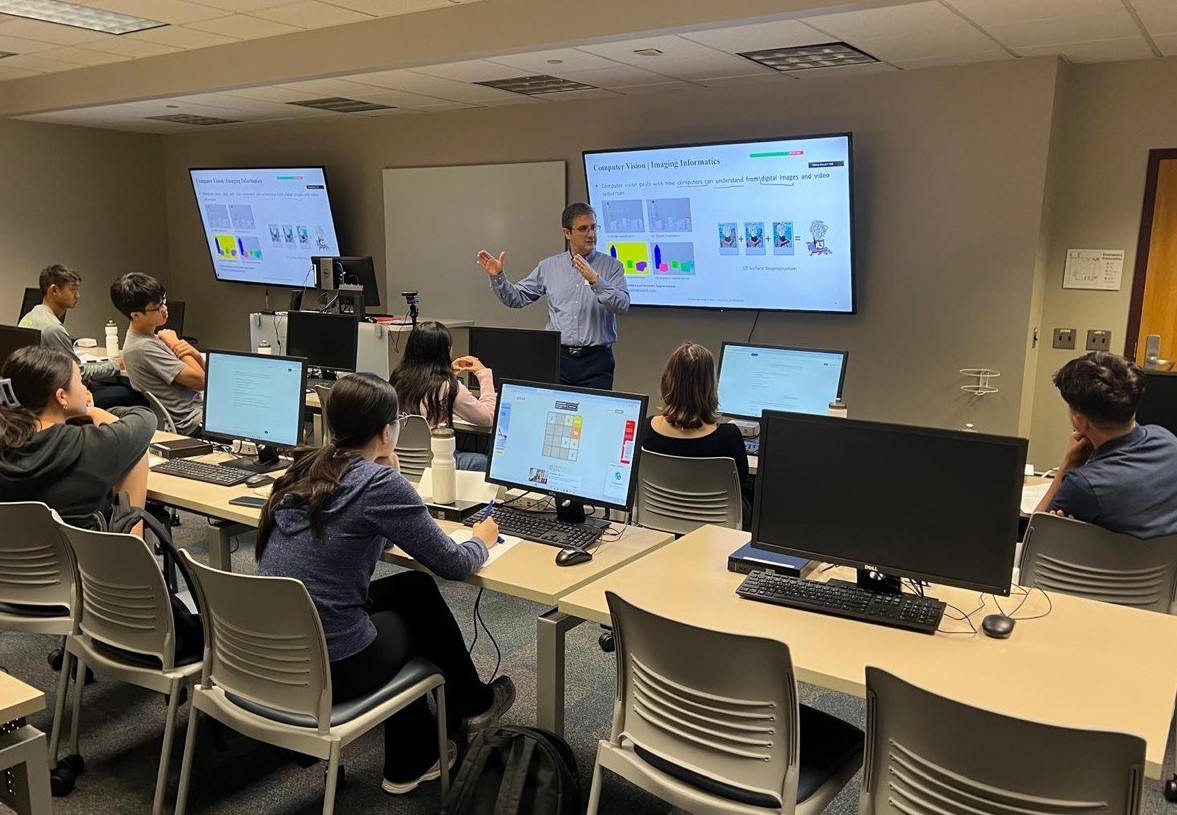
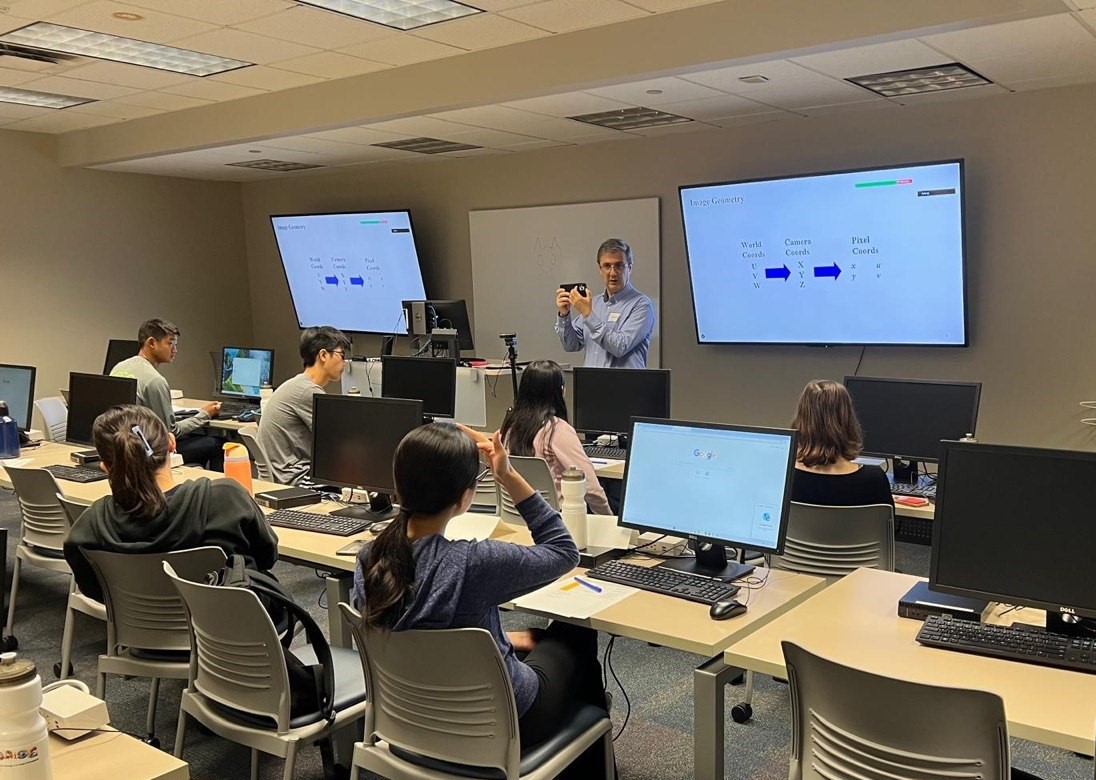
- June 2026: The Pitt AI Summer School 2026 successfully concluded on June 12, following a week of hands-on learning in artificial intelligence, healthcare innovation, and medical imaging.
- June 2026: Pitt HexAI Podcast Episode #41 featuring Dr. Bradley J. Erickson, MD, PhD from Mayo Clinic is now available on all major podcast platforms. HexAI Podcast .
- May 2026: Our paper An AI-Driven Pipeline for Localization, Segmentation, and Classification of Carpal Tunnel Syndrome Using Ultrasound Images of the Median Nerve led by Rachel Hyzny and colleagues, has been published in HAND, highlighting AI-powered ultrasound solutions for musculoskeletal care.
- May 2026: The KneeXNet-2.5D study, published in npj Health Systems, was featured in the University of Pittsburgh School of Health and Rehabilitation Sciences (SHRS) Newsroom , highlighting its contributions to trustworthy and explainable AI for musculoskeletal healthcare.
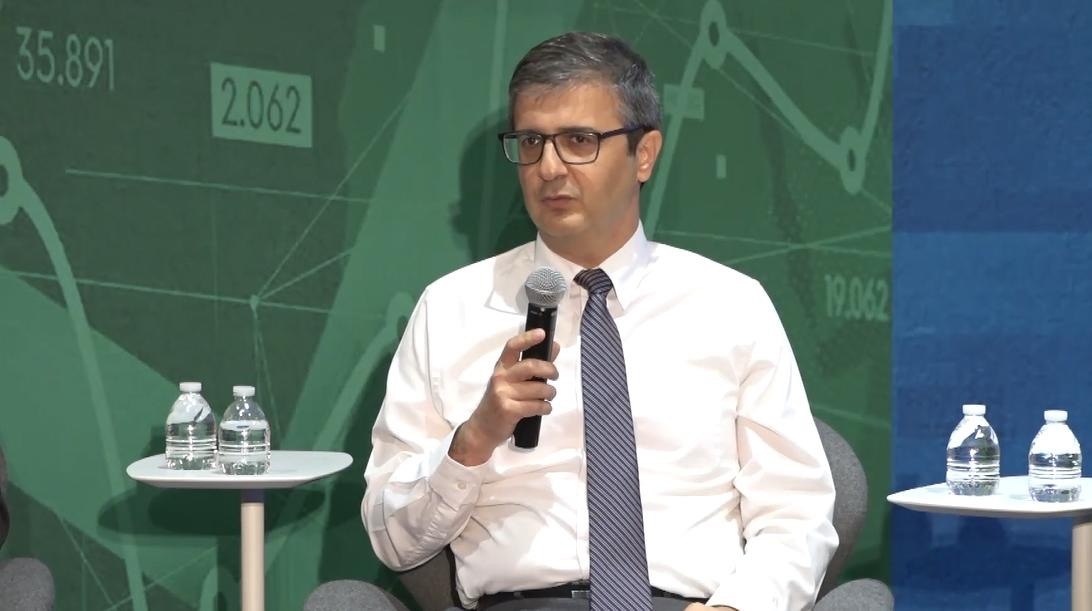
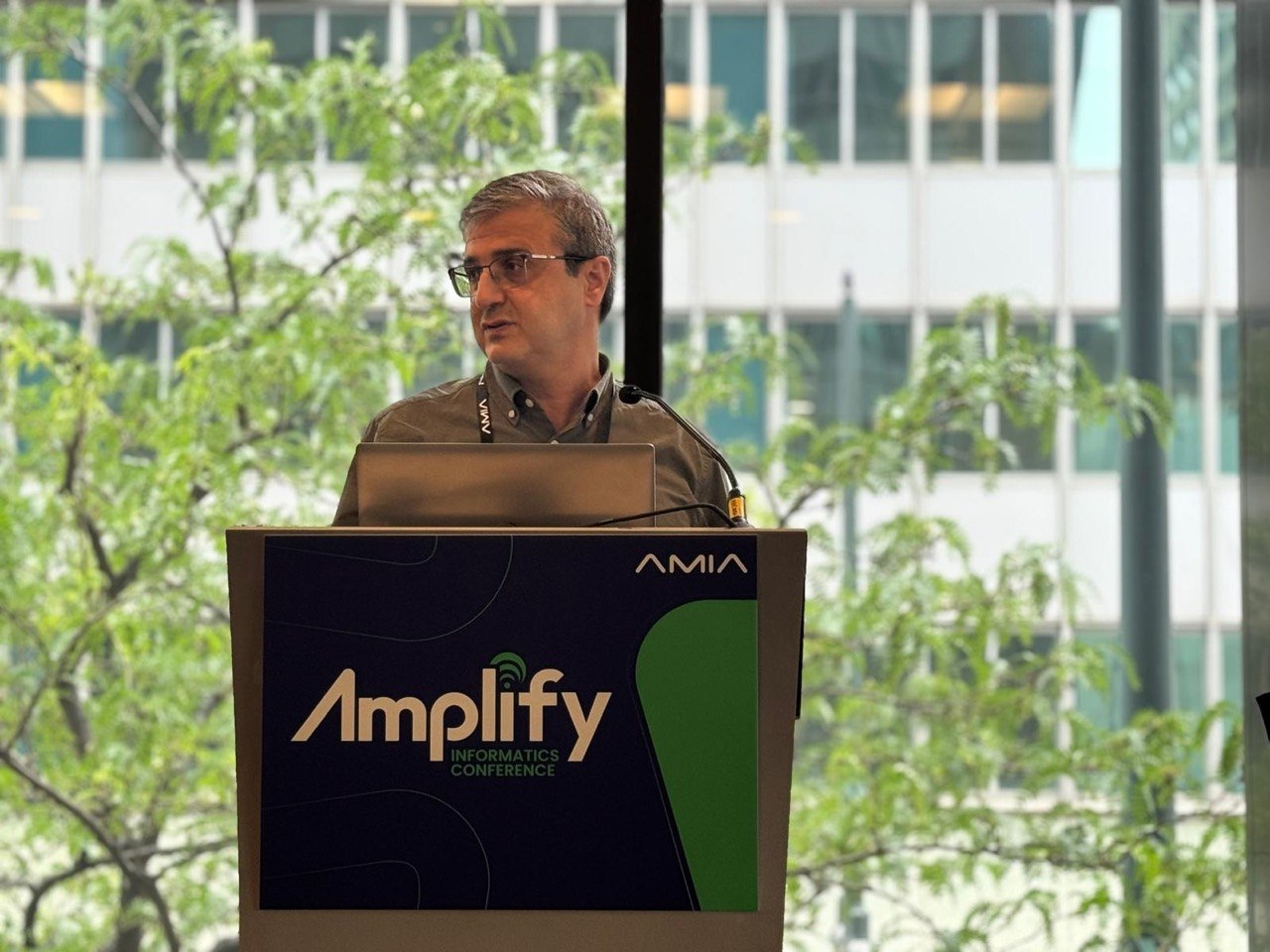
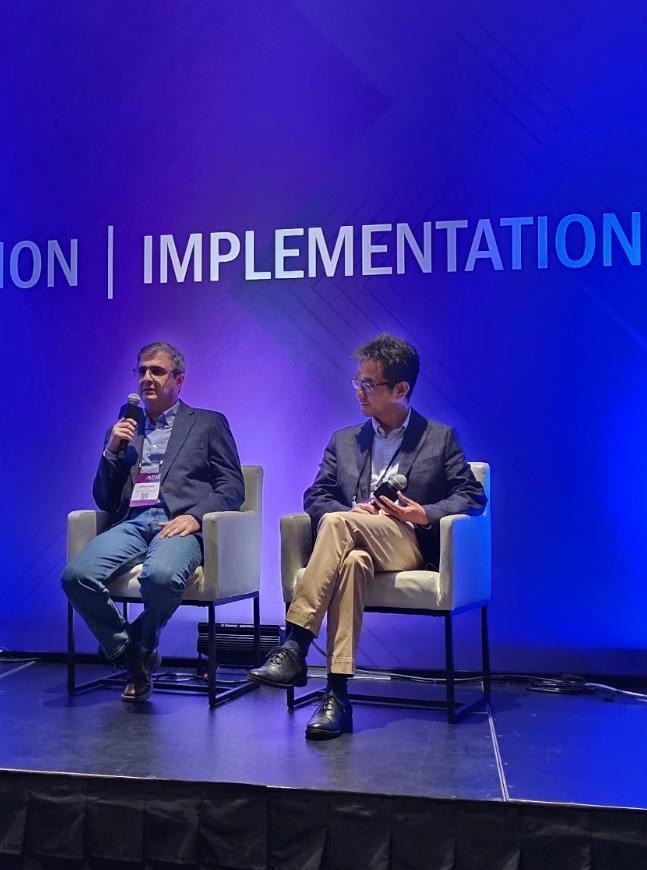
- May 2026: Dr. Ahmad Tafti participated in an expert panel discussion at the AMIA Amplify Conference in Denver, Colorado, focusing on responsible and explainable AI in healthcare.
- May 2026: Our abstract, "Preoperative Trustworthy and Explainable AI for Early Length-of-Stay Prediction in Foot and Ankle Surgery", led by Farnaz Rezvani and Michael Kann and colleagues, has been accepted for presentation at the AOFAS Annual Meeting & IFFAS Biennial Meeting 2026 in Seattle, Washington _ September 16–19, 2026.
- May 2026: Dr. Shyam Visweswaran and Dr. Ahmad Tafti visited Malmö University, Sweden to explore collaborative opportunities in trustworthy and sustainable AI, medical imaging, and healthcare AI research.
- May 2026:
Our submissions to AMIA 2026 have been accepted.
𝗙𝘂𝗹𝗹 𝗽𝗮𝗽𝗲𝗿: "Explainable Federated Learning to Predict Cardiac Complications Following Total Hip and Knee Arthroplasty" led by Emily Bogden and colleagues.
𝗔𝗯𝘀𝘁𝗿𝗮𝗰𝘁: "A Maintainable and Uncertainty-Aware AI-Powered Pipeline for Knee Radiograph Registry Labeling Under Domain Shifts" led by Yushui Han and colleagues.
𝗙𝘂𝗹𝗹 𝗽𝗮𝗽𝗲𝗿: "Coverage-Aware Exemplar Selection for Few-Shot Generative Modeling of Plain Knee Radiographs" led by Nickolas Littlefield and colleagues.
𝗔𝗯𝘀𝘁𝗿𝗮𝗰𝘁: "AI-Based Smartphone Measurement of Shoulder Range of Motion" by Palak Shah and colleagues.
𝗙𝘂𝗹𝗹 𝗽𝗮𝗽𝗲𝗿: "Explainable Machine Learning with Uncertainty Quantification for Cardiac Risk Prediction Following Total Knee and Hip Arthroplasty" led by Zoe Menezes and Farnaz Rezvani and colleagues.
- May 2026: The paper "Trustworthy artificial intelligence in predictive medicine: cancer survival analysis using ethical-by-design and explainable artificial intelligence models" led by Sajede Farahani and colleagues has been published in JAMIA Open .
- May 2026: Pitt HexAI Podcast Episode #40 featuring Dr. Freddy T. Nguyen, MD, PhD is now available on all major podcast platforms. HexAI Podcast .
- April 2026: Pitt HexAI Podcast Episode #39 featuring Dr. George Demiris, PhD, FACMI is now available on all major podcast platforms. HexAI Podcast .
- April 2026: Our team will present three research contributions at the IEEE International Symposium on Biomedical Imaging (ISBI 2026) in London, UK (April 8–11, 2026).
- March 2026: Dr. Jacob Mathew will serve as a keynote presenter and panelist at the 62nd Annual Medical Conference and International Health Exhibition in Addis Ababa, Ethiopia (March 27–28, 2026). His talk, "Learning to Lead", will be featured in the panel "AI in Academic Medicine: Leveraging Artificial Intelligence to Accelerate Scientific Discovery and Transform Medical Education".
- March 2026: Pitt HexAI Podcast Episode #38 featuring Martin Raison, MSc is now available on all major podcast platforms. HexAI Podcast .
- March 2026: Hiring: Research Assistant position available in the HexAI Lab at the University of Pittsburgh for AI-driven medical imaging research. Apply here.
- March 2026: The AI Summer School – Medical Imaging Informatics will be held at the University of Pittsburgh (June 8–12, 2026). This free one-week program introduces high school students to the exciting world of AI in medical imaging, including Python programming, CNNs and U-Net, and hands-on medical image analysis, with guest lectures from leading researchers in academia and industry. Learn more & register.
- Feb. 2026: The paper "KneeXNet-2.5D: a clinically-oriented and explainable deep learning framework for MRI-based knee cartilage and meniscus segmentation" by Maimouna S. and colleagues has been published in npj Health Systems .
- Feb. 2026: The abstract "An Explainable Age- and Sex-Aware Contrastive Artificial Intelligence Framework for Knee Osteoarthritis Classification" by Fengyi Gao and colleagues has been accepted at the IEEE International Symposium on Biomedical Imaging (ISBI 2026) , London, UK.
- Feb. 2026: The abstract "Prompt-Constrained Vision–Language Models for Zero-Shot Orthopedic Pathology Recognition" by Farnaz Rezvani and colleagues has been accepted at the IEEE International Symposium on Biomedical Imaging (ISBI 2026) , London, UK.
- Feb. 2026: Pitt HexAI Podcast Episode #37 featuring Ekaterine Kldiashvili, PhD is now available on all major podcast platforms. HexAI Podcast .
- Jan. 2026: Recent contributions on 2.5D knee MRI segmentation using explainable and uncertainty-aware AI were presented at the Pittsburgh ACL Research Retreat, in collaboration with the Department of Orthopaedics, University of Pittsburgh–UPMC , within the field of sports medicine, including Dr. Tring Cong, Dr. James Irrgang, Dr. Will Pitt, and Dr. Volker Musahl. Pitt HexAI .
News: 2025 and Earlier
- Dec. 2025: Our Pitt HexAI podcast episode featuring Richard Bonneau, PhD is now available on all major podcast platforms. HexAI Podcast .
- Dec. 2025: Jason Guattery, our PhD student at the University of Pittsburgh School of Health and Rehabilitation Sciences, published a paper, entitled "Explainable Machine Learning to Predict Prolonged Post-Operative Opioid Use in Rotator Cuff Patients" in BMC Musculoskeletal Disorders.
- Dec. 2025: Ahmad P. Tafti has received a research grant from Pittsburgh Cure Sarcoma (PCS) as the sole Principal Investigator (PI) for the research project, "Explainable and Uncertainty-Aware AI to Predict Response to Therapy in Adult and Pediatric Sarcomas". Thanks to PCS for supporting our research project.
- Dec. 2025: Fengyi Gao, Nickolas Littlefield, and Nicole Myers have had their paper, "Explainable Contrastive Learning for KL Grading Classification in Knee Osteoarthriti", published at the IEEE EMBC 2025 conference.
- Nov. 2025: Ahmad P. Tafti, PhD, is serving as a speaker at MEDIC 2025 in Tbilisi, Georgia.
- Nov. 2025: The podcast episode featuring Dennis Wei, PhD is now available on all major podcast platforms. HexAI Podcast.
- Nov. 2025: Our team presented two works at AMIA 2025.
- Oct. 2025: Dr. Yates (a member of our advisory board at Pitt HexAI) now serves as the Chair for BOS (Board of Specialty Societies), which includes a seat on the AAOS (American Academy of Orthopaedic Surgeons) Board of Directors.
- Oct. 2025: Ahmad will serve as a panelist at Advancing Precision Medicine Conference , 2025.
- Sep. 2025: We have one paper and a tutorial accepted at ISVC 2025.
- Sep. 2025: Ahmad will give a talk at 39th Annual Plenary, Working Group Meeting and HL7 FHIR Connectathon .
- Jul. 2025: We have one contribution accepted at RSNA 2025 .
- Jun. 2025: We have two contributions accepted at AMIA 2025 Annual Symposium .
- Mar. 2025: Ahmad will be giving a talk on "Uncertainty-Aware Explainable AI for Medical Imaging" at the School of information, Florida State University, US.
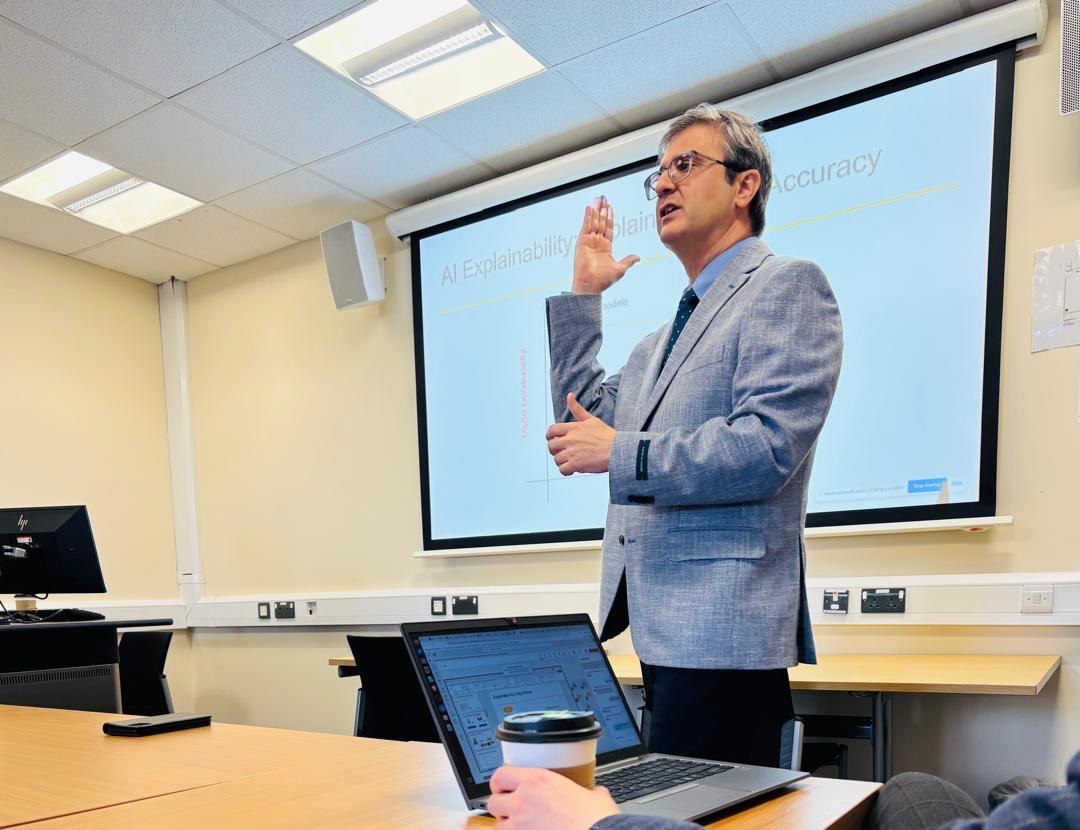
- Mar. 2025: Ahmad will be giving a talk on "Trustworthy AI in Orthopedic Imaging", and will be exploring collaboration at University of Aberdeen, Scotland.
- Feb. 2025: We are organizing Pitt AI in Healthcare Research Symposium, US. Please join us!
- Feb. 2025: Ahmad is serving as a PC member at Workshop on Computational Linguistics and Clinical Psychology, US.
- Feb. 2025: We are honored to provide research mentoring services to three very talented students at RAI for Ukraine at NYU, US.
- Feb. 2025: Our fair and explainable ML on cancer survival analysis is now out at International Journal of Medical Informatics.
- Jan. 2025: Our grant application (serving as the PI) on AI for Sarcoma was officially funded by Pittsburgh Cure Sarcoma, US.
- Jan. 2025: Ahmad is serving in the Organization Committee of REF-AI for Medical Imaging Informatics Workshop, US.
- Jan. 2025: Serving as the Tutorial Chair(s) at IEEE ICHI 2025, Italy.
- Oct. 2024: Ahmad is serving as the Tutorial Chair(s) at IEEE ICHI 2025.
- Sep. 2024: Ahmad will give a talk on AI Explainability in Healthcare at the WPHIMA. You may register here!
- Sep. 2024: Ahmad is giving a talk at the CCC Conference organized by OHRP within the U.S. Department of Health and Human Services.
- Sep. 2024: Our Generative AI in Orthopedics paper has been published by JAMIA.
- Aug. 2024: Our Knee ROM paper has been published at the Journal of Knee Surgery.
- Aug. 2024: Ahmad has been appointed to the Journals and Publications Committee for the 2024-2025 term at AMIA.
- Jul. 2024: Our Nature-Scientific Reports paper on Fair AI-powered orthopedic image segmentation is out now.
- Jun. 2024: We are organizing AI Summer School in Medical Imaging Informatics.
- May. 2024: We got two papers accepted at MICCAI 2024.
- Feb. 2024: Serving as a session chair of "Advances in Image Classification" at AMIA 2024 Informatics Summit.
- Jan. 2024: Serving as a PC member at AIME 2024, hosted by the University of Utah.
- Dec. 2023: Have a podium abstract accepted at AMIA 2024 Informatics Summit.
- Nov. 2023: Zoe Menezes and Avani Chhabra are now at SHRS Blog.
- Oct. 2023: Our HexAI-TJAtxt paper/dataset is now published at Data in Brief.
- Sep. 2023: Serving as a Program Committee member at AMIA 2024 Informatics Summit.
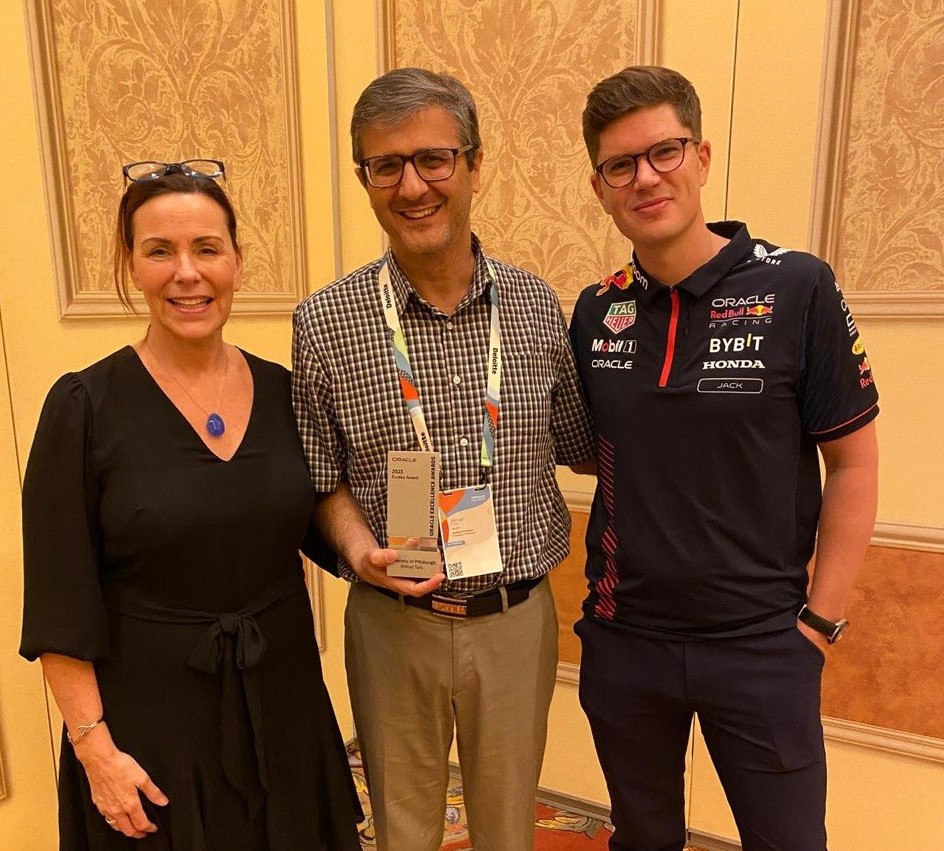
- Sep. 2023: We were awarded Oracle Excellence Eureka Award 2023.
- Sep. 2023: Serving as the Industry Track Chair at IEEE ICHI 2024.
- Jul. 2023: Have a work accepted at IEEE BHI 2023.
- Jul. 2023: Have a work accepted at AMIA Annual Symposium 2023.
- Jun. 2023: Our EBAIC 2023 GitHub repository is now publicly and freely available here!
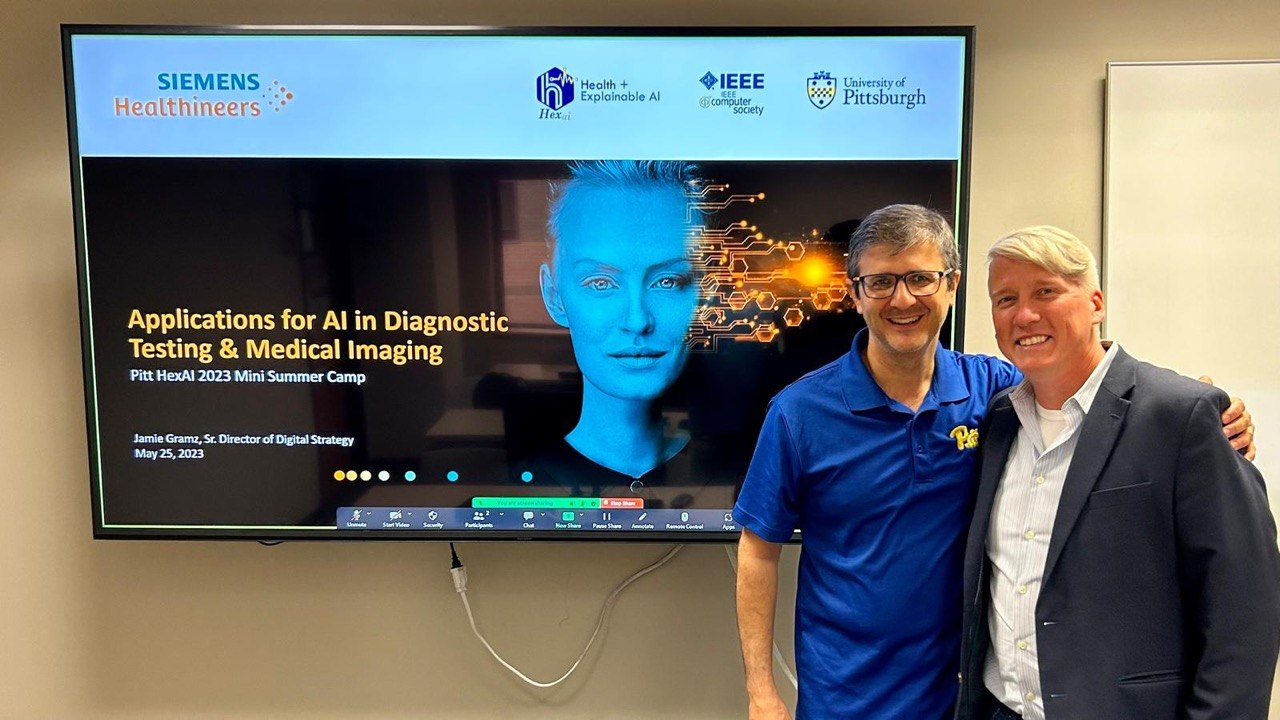
- Jun. 2023: Pitt HexAI is organizing a free Mini Summer Camp in AI. Target audiences are High School Students (grades 11 & 12).
- Jun. 2023: Ahmad P. Tafti has been invited as a keynote speaker and panelist at CMU- K&L Gates Conference in Ethics and AI, organized by Carnegie Mellon University. Join us, please!
- Apr. 2023: Ahmad P. Tafti has been invited as a keynote speaker at Pitt's Orthopaedic Surgery Research Retreat. Please, join us!
- Apr. 2023: Ahmad P. Tafti has been invited as a keynote speaker at Responsible AI in the Natural Sciences, organized by Carnegie Mellon University. Join us, please!
- Apr. 2023: Have two more works accepted at IEEE ICHI 2023. Kudos to Nick, Tina, Isameel, Avani, Zoe, and Annie!
- Mar. 2023: Pitt HexAI has submitted two podium abstracts at AMIA 2023 Annual Symposium. Kudos to Nick and Tina!
- Mar. 2023: Our work on explainable deep few-shot learning has been accepted as a full-paper at IEEE ICHI 2023. Kudos to Nick!
- Mar. 2023: We are delighted and honored to have Prof. Ines Lohse, PhD join us as our Associate Director. Welcome, Ines!
- Mar. 2023: Our lab has started launching Health and Explainable AI Podcast series.
- Feb. 2023: Our lab is happy to participate at the 3rd Annual Deep Learning Workshop presented by The OSCT at Marquette University.
- Feb. 2023: Annie's work on primary total shoulder arthroplasty has been accepted at MedInfo 2023. Thank you, Annie!
- Jan. 2023: We were awarded Oracle for Research Award. Thank you, Oracle!
- Jan. 2023: We were awarded University of Pittsburgh CTSI Award. Thank you, Pitt CTSI!
- Jan. 2023: Have an accepted workshop on Ethics and Bias of AI in Clinical Applications at IEEE ICHI 2023.
- Nov. 2022: We've submitted a student abstract/poster at MedInfo 2023.
- Sep. 2022: We've submitted an abstract at AMIA 2023 Informatics Summit.